 Cart is empty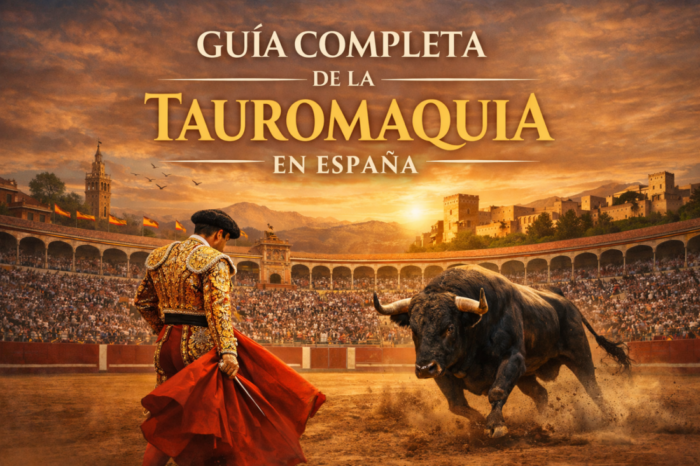
Attending a bullfight in Spain is stepping into one of the oldest, most complex, and visually striking spectacles in the world. Bullfighting (tauromaquia) is not simply an event; it is an amalgamation of art, history, tragedy, and triumph that has inspired writers like Ernest Hemingway, painters like Francisco de Goya and Pablo Picasso, and millions of spectators over the centuries.
For the international visitor, the world of bullfighting can be overwhelming. From the strict protocol that governs the arena to the highly specific vocabulary used by aficionados, there is a lot to take in. This comprehensive guide is designed with the utmost rigor and professionalism to offer you a deep understanding of this universe. Here you will discover exactly what a bullfight is, which bullring temples you must visit, the names of the masters who have made history, and, most importantly, how to secure your seat to experience this firsthand.
What is a Bullfight (Corrida de Toros)?
A classic bullfight is a ritualistic and scenic event that pits man, armed with his skill and technique, against the brute force and instinct of the brave bull (toro bravo). Unlike what many visitors initially assume, it is not a sport. There are no scoreboards, no ties, and no teams. It is considered an artistic discipline framed within the traditional performing arts of Spain.
To understand and respect the spectacle, it is essential to know its structure. A standard bullfight features three matadors who fight two bulls each, making a total of six bulls. The entire event lasts approximately two to two and a half hours.
Each individual fight (the encounter with a single bull) lasts about 20 minutes and is rigidly divided into three acts or “tercios,” which are announced by the sound of a bugle:
1. El Tercio de Varas (The Lancing Phase)
This is the first real contact. When the bull enters the ring, the matador receives it with the capote (a large, heavy cape, usually fuchsia and yellow). Here, the bullfighter evaluates the animal’s charge, its strength, whether it tends to hook left or right, and its bravery. After these initial passes, the picadors enter the ring, mounted on horses protected by heavy armor. The picador uses a long lance (puya) to pierce the bull’s morrillo (the neck muscle). This serves a dual purpose: to measure the animal’s bravery against punishment and to make it lower its head for the final act.
2. El Tercio de Banderillas (The Banderillas Phase)
In this dynamic and agile phase, the banderilleros (members of the matador’s crew) or sometimes the matador himself, plant three pairs of banderillas (colorful barbed darts) into the bull’s shoulders. The goal of this phase is not to weaken the animal, but the exact opposite: to “enliven” it and revive its mobility and bravery after the encounter with the picador, preparing it for the final act.
3. El Tercio de Muerte (The Faena or Phase of Death)
This is the climactic and most artistic moment. The matador enters the ring alone, armed only with the muleta (a smaller, lighter, dark red cape) and a sword. The bullfighter has ten minutes to perform “the faena.” Through a series of linked passes, the matador seeks to create an ephemeral work of art, demonstrating mastery, timing, and aesthetics, sculpting the bull’s charge mere inches from his body. The fight concludes with the “suerte suprema” or the sword thrust, where the matador must kill the bull as quickly and cleanly as possible.
If the performance has been exceptional, the audience will wave white handkerchiefs, asking the President of the bullring to award the matador with one ear, two ears, or, in historic cases, the bull’s tail. If the bull demonstrates extraordinary bravery, the public may ask for the “indulto” (pardon), sparing its life to return to the countryside as a breeding stud, though this is extremely rare.
The Best Bullrings in Spain
The stage where the bullfight takes place is as important as the event itself. Bullrings, also known as plazas de toros, are architectural gems that reflect the history of their cities. They are divided into categories (first, second, and third) according to their importance, ring size, and the demanding nature of their audience.
Plaza de Toros de Las Ventas (Madrid)
Considered the “Cathedral of Bullfighting,” Las Ventas is the most important and demanding bullring in the world. Built in a beautiful Neo-Mudéjar style with exposed brick and hand-painted tiles, it holds nearly 24,000 spectators. The Madrid audience is known for its rigor, its deep knowledge of technique, and its dead silence during the faena—a silence broken only by resounding “olés” when the matador executes perfection.
La Real Maestranza de Caballería (Seville)
If Las Ventas is about rigor, La Maestranza is about art and feeling. Located on the banks of the Guadalquivir River, this Baroque-style bullring, with its unmistakable white arches and albero (the characteristic yellow sand of the south), is considered the most beautiful in Spain. The Sevillian audience deeply values aesthetics, grace, and soul. Opening the famous “Prince’s Gate” (Puerta del Príncipe), for which a matador must cut three ears, is the ultimate dream of any bullfighter.
Plaza de Toros de Valencia
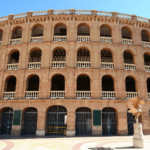
Located in the heart of the city, right next to the North Station, this imposing neoclassical bullring is inspired by Roman amphitheaters (specifically the Colosseum in Rome). With a large and comfortable ring, it hosts the first major fair of the Spanish bullfighting calendar, making it a crucial barometer for the rest of the season.
La Malagueta (Málaga)
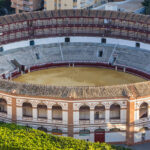
A few meters from the Mediterranean Sea stands La Malagueta, a Neo-Mudéjar style bullring in the shape of a hexadecagon (16 sides). It is a ring with a special charm, where the sea breeze mixes with bullfighting passion. The audience in Málaga is warm, passionate, and festive, making the August bullfights a vibrant experience full of light.
Other Must-Visit Bullrings
- Pamplona: World-famous for the San Fermín festival. The bullring is the endpoint of the morning bull runs, and in the afternoons, it transforms into an unparalleled festival of color and local fan clubs (peñas).
- Ronda (Málaga): One of the oldest bullrings in Spain, built entirely of stone. It is the cradle of modern bullfighting on foot and hosts the exclusive and elegant “Corrida Goyesca,” where bullfighters and the audience dress in 18th-century attire.
Major Bullfighting Festivals (Ferias)
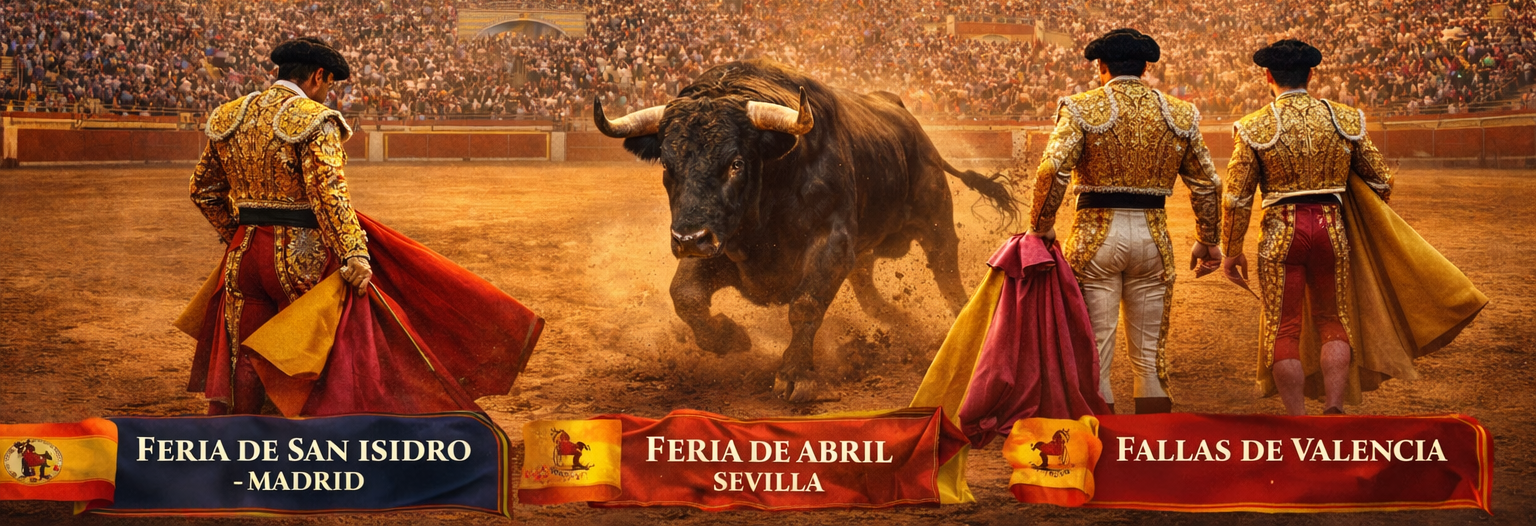
The bullfighting season in Spain traditionally begins in early March and concludes in mid-October. There are not bullfights every weekend in every city; events are grouped into “Ferias” (fairs), which usually coincide with each city’s patron saint festivities. These are the most notable ones:
1. Feria de Fallas (Valencia)
- When: March.
- Significance: It is the first major fair (Category 1) of the year, marking the real start of the season. The top figures in the rankings gather here, looking to kick off the year with a resounding triumph amid the warmth and fire of the famous Valencian Fallas.
2. Feria de Abril (Seville)
- When: April / May.
- Significance: Two weeks of daily bullfights in La Maestranza. It is the epitome of bullfighting elegance. The atmosphere in the city, the horse carriages, and the women dressed in flamenco dresses in the stands make this fair an event of absolute cultural magnetism.
3. Feria de San Isidro (Madrid)
- When: May / June.
- Significance: The “World Cup” of bullfighting. For an entire month, Las Ventas opens its doors every day. A triumph in San Isidro can change a bullfighter’s life, catapulting them to absolute stardom or sinking them into oblivion. The pressure is at its maximum, and the largest, most formidable bulls in the world are fought here.
4. Feria de San Fermín (Pamplona)
- When: July 7 to 14.
- Significance: The very same bulls that run through the cobbled streets in the morning are fought in the afternoon. The contrast in the arena is fascinating: the “sun” sections are a wild party of music and food, while the “shade” sections pay strict attention to the technical aspects of the fight.
5. Feria de Málaga (August Fair)
- When: Mid-August.
- Significance: In the height of the Andalusian summer, La Malagueta becomes the bullfighting epicenter. It attracts major figures and tourists from all over the world who combine their vacations on the Costa del Sol with afternoons of bullfighting glory.
Famous Matadors You Should Know
Bullfighting has evolved over the centuries thanks to exceptional figures who changed the way the fight is understood. Knowing the historical and current protagonists will help you better grasp the magnitude of the event.
Historical Legends
- Juan Belmonte: Revolutionized bullfighting in the early 20th century. Before him, the rule was “either you move, or the bull moves you.” Belmonte introduced the concept of standing still and fighting close, changing the paradigm forever.
- Joselito “El Gallo”: Belmonte’s contemporary and ultimate rival. He was considered the most complete bullfighter, mastering all phases of the fight to perfection.
- Manolete: The ultimate myth of post-war Spain. His serious demeanor and his upright, stoic, and tragic fighting style drew massive crowds. His tragic death in the Linares ring in 1947 elevated him to the status of an immortal legend.
Contemporary Figures
- Andrés Roca Rey: The current phenomenon. This young Peruvian matador can sell out any bullring in the world. His style relies on colossal courage, standing in territories that seem impossible and letting the bull pass millimeters from his body.
- Morante de la Puebla: The genius of art. He represents classical, highly aesthetic, and inspirational bullfighting. When Morante is having a good afternoon, he executes the most beautiful passes a fan could dream of.
- Alejandro Talavante: Known for his improvisation, his prodigious left hand, and his ability to connect with younger audiences through his unpredictable style.
- Julián López “El Juli”: Although recently retired, he has been the absolute master of technique for the last 25 years. A prodigious fighter capable of understanding and dominating any type of bull.
How to Buy Bullfight Tickets
Getting good tickets for a bullfight can be a challenge, especially during major festivals like San Isidro or the Feria de Abril, where rings frequently display the “No hay billetes” (Sold out) sign.
Understanding Pricing and Seating Zones
The price of a bullfight ticket depends primarily on two factors: proximity to the arena and location relative to the sun.
- Sombra (Shade): These are the most expensive and sought-after tickets. They offer comfort and a clear view, without the glare or heat of the Spanish afternoon sun.
- Sol (Sun): These are the most affordable. The atmosphere is usually more festive and informal, but you will have to endure the high temperatures and direct sunlight during the first half of the event.
- Sol y Sombra (Sun and Shade): Intermediate tickets. They start in the sun, but as the afternoon progresses and the sun sets, they become shaded.
Regarding rows, they are typically divided into:
- Barrera and Contrabarrera: The first and second rows, right at the edge of the sand. These are the most exclusive and expensive seats. You can feel the bull’s breath and hear the matador’s instructions.
- Tendido: The main grandstands. They offer an excellent and balanced view to appreciate the geometry and movements of the fight. They are usually the best option for value and quality.
- Grada and Andanada: The highest sections of the bullring. They are more economical, provide a general panoramic view, and are usually covered by a roof.
Where to Secure Your Tickets with Total Confidence
To avoid fraud, abusive scalping, or the disappointment of arriving at the box office only to find it closed, the most professional and intelligent way to plan your visit is to purchase your seats in advance through official, specialized distributors.
For your convenience and security, here are the direct links to reserve your tickets in the main bullfighting capitals, ensuring a clear, safe, and official purchasing process:
- Madrid (Las Ventas): Get your seats for the cathedral of bullfighting and the San Isidro Fair. Book your Madrid tickets here.
- Seville (La Maestranza): Enjoy the magic of Andalusian bullfighting and the April Fair in the most beautiful ring. Book your Seville tickets here.
- Valencia (Plaza de Toros): Secure your spot for the Fallas Fair or the July Fair. Book your Valencia tickets here.
- Málaga (La Malagueta): Experience the vibrant atmosphere of the August Fair by the Mediterranean. Book your Málaga tickets here.
Final Tips for the Visitor
Arrive at least 30 to 45 minutes before the start. At the exact announced time (it is the only event in Spain that is strictly punctual), the doors close and the “Paseíllo” begins—the opening parade introducing the matadors, their crews, and officials. It is a visual spectacle accompanied by the chords of a traditional pasodoble that you shouldn’t miss. Maintain silence and respect during the fight, and let yourself be carried away by one of the deepest and most mysterious traditions of Spanish culture.