
View your cart at checkout.
Proceed to checkoutPlaça de Bous - Valencia
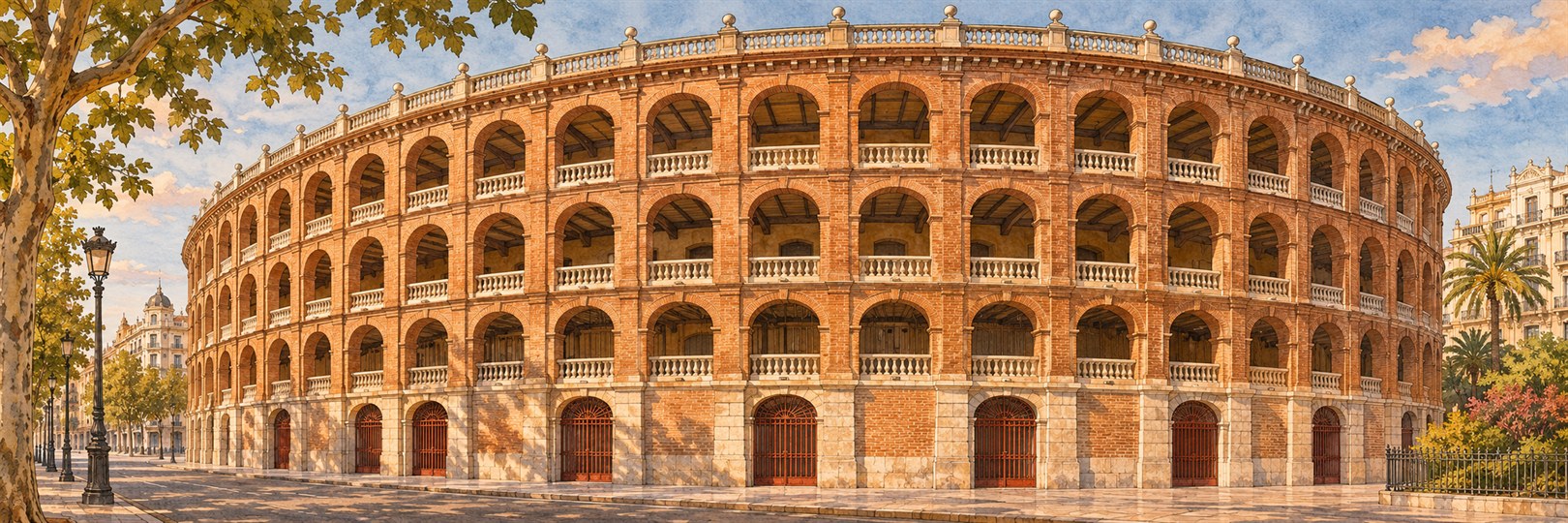
Valencia Bullring and the Estació del Nord
Two buildings stand side by side on Carrer de Xàtiva. One is the Plaça de Bous, Valencia’s brick bullring. The other is the Estació del Nord, the railway station decorated with ceramic oranges and orange blossom. By the time the present station welcomed its first passengers in 1917, people had been coming to this ring for bullfights for more than half a century.
Look for the bronze statue of the Valencian banderillero Manolo Montoliu outside the ticket offices. It makes an easy meeting point before a performance and gives you a good view of the curve of the arena.
The story behind the brick arcades
Local architect Sebastián Monleón Estellés designed the bullring near the old Russafa gate, just outside the city walls. Spectators saw José Redondo, known as El Chiclanero, perform here in August 1851 while construction was still under way. The official opening came in 1859.
From across the street, the building looks circular. Follow the façade with your eye and you can pick out the flat sections of its 48-sided plan. The four tiers also reward a closer look. The ground-floor arches have a shallow curve, while the three rows above form half-circles. Inside, slender iron columns support the upper galleries.

How to read the Valencia Bullring seating plan
Find the sand in the centre of the plan, then work outwards to the rings of seats. Your row determines how much of the ring you can see at a glance. The side you choose determines how much afternoon sun to expect. These are the Spanish terms you’ll see when choosing a seat.
Barrera and contrabarrera · front rows
Barrera means the front row, closest to the wooden boards around the arena. The contrabarrera is the row immediately behind it. These seats give you a close view of the matador’s footwork when the action comes to your side of the ring.
Tendidos · the main stands
A tendido is a numbered section of stepped seating. Within the same section, a lower row brings you nearer the sand, while a middle row gives you more height to follow movement across the ring. Check both the section number and the row when comparing seats.
Primera and segunda naya · upper galleries
Naya is the Valencian name used here for an upper gallery. The first naya sits above the main stands and the second is the highest seating level. Both offer a broad view, particularly during the paseíllo, the opening procession across the sand.
Sol and sombra · sun and shade
Two seats at the same height can feel quite different on a July afternoon. Choose sombra if sitting in shade is a priority. For a seat marked sol, take the start time into account. The edge of the shade moves across the arena as the afternoon goes on.
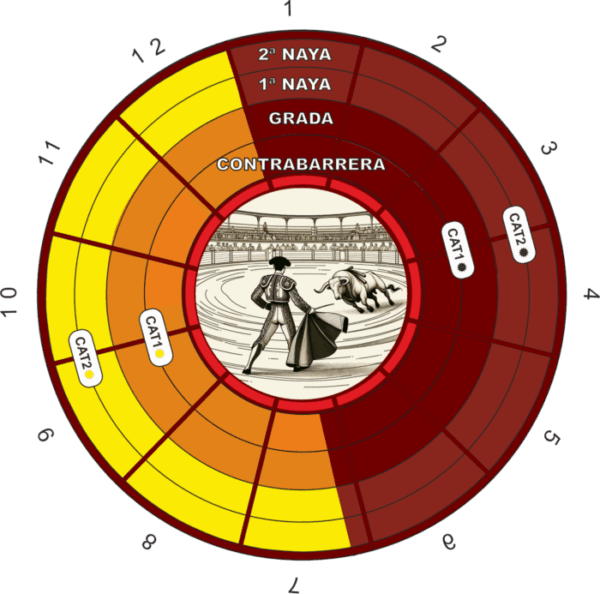 View the seating plan
Fallas in March and the July Fair
The Fallas fair brings bullfighting to the city centre in March. On days when the nearby Plaça de l’Ajuntament hosts a mascletà, crowds gather for the daytime firecracker display and then spill into the surrounding streets. Allow time to reach the gate printed on your ticket if you’re attending that afternoon.
The July Fair, also called the Feria de San Jaime, dates to 1871. That first July fair added a trade fair to the bullfights already held for the feast of San Jaime. On today’s festival posters, look for the type of performance as well as the names. A novillada features apprentice bullfighters, while rejones means bullfighting on horseback.
Getting to the bullring and the museum
The arena is at 28 Carrer de Xàtiva, beside the main exit of the Estació del Nord railway station. For the metro, use Xàtiva on lines 3, 5 or 9. During Fallas, check Metrovalencia’s service notices before travelling, especially around the time of the mascletà.
The Bullfighting Museum has a separate entrance at 10 Pasaje Doctor Serra. Founded in 1929, it holds historic posters and a scale model that makes it easier to picture the tiers of seating. If you also hope to see inside the arena, check access with the museum for the day of your visit. Valencia Bullfighting Museum visitor information.
Bullfight dates and tickets in Valencia
Open a performance in the Valencia calendar to see its date, start time and available seating. If CAT1 and CAT2 are offered, check which seating area and sun or shade designation each includes for that performance. Once announced, the cartel, or bill, names the bullfighters and the ganadería, the ranch supplying the bulls. If a listing shows a provisional date, check it again before making travel plans.
View bullfight dates and tickets in Valencia